
Well Pump Motor Overheating: Why It Cuts Out and Restarts
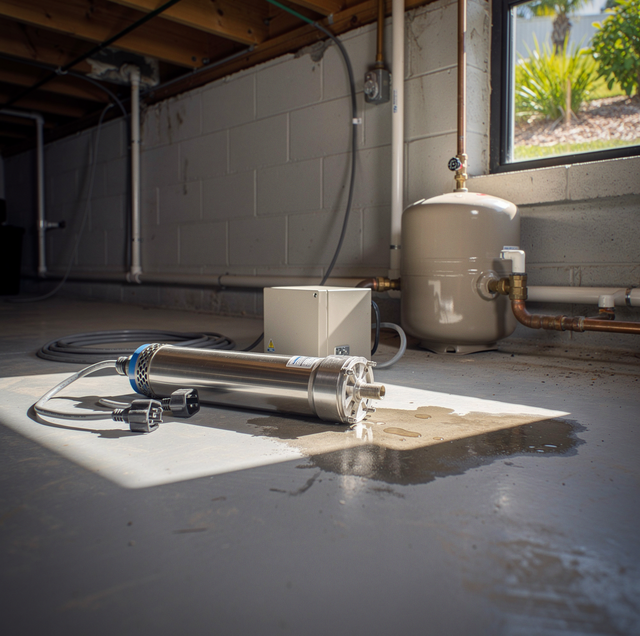
The shower fades to a trickle halfway through, and the pipes in your wall go quiet. You walk out to the breaker panel, and nothing has moved. Twenty minutes later, the taps run normally again, and the whole episode feels like it never happened.
That pattern, running fine, cutting out, then coming back on its own, describes a thermal protector doing its job inside your pump motor. The switch opened because the motor got hot, and it closed again once the motor cooled. Nothing you touched broke it, and nothing you touch will fix it. What deserves your attention is the reason a motor sized for your well runs hot enough to shut itself down at all.
Why a Submersible Motor Has No Air to Cool Itself
A motor bolted to a slab in a pump house radiates heat into the surrounding air. A submersible motor hangs a few hundred feet down a narrow casing with no air anywhere near it, so the only thing carrying heat away is the water the pump is already moving. Industry guidance on selecting submersible motors is direct about it: a minimum flow velocity and adequate water flow past the motor are what maintain safe operating temperatures. Velocity, not depth, and not submersion.
Submersion and cooling are not the same condition, and the difference is the one most owners never picture. A motor sitting in a large-diameter casing, a pit, or an open body of water can be completely underwater and still climb toward its limit because the film of water touching the can warms up and stays there rather than being replaced. The trade has a name for the fix: a flow inducer sleeve, usually shortened to a flow sleeve. It is a tube around the motor that forces every gallon the pump draws up along the motor's skin before it reaches the intake. The same guidance leaves no room for doubt: in open water, a flow sleeve is not optional. A pump dropped into a pond, a cistern, or an oversized casing without one carries a cooling problem from the first day.
That is why a pump that ran quietly for years can begin cutting out with nothing electrical having changed. The motor did not get weaker. The water around it got slower, shallower, or dirtier, and the margin the design counted on went with it.
What Seeps Into a Submersible Motor as Its Seals Wear?
The motor itself is a sealed can filled with clean fluid that lubricates the bearings and carries heat out to the housing wall, where the well water takes it away. A shaft seal stands between that fluid and the well, and fine sand moving through the pump works on it every hour. Reference material on pump protection switches names debris among the conditions that shorten a pump's life, alongside low voltage, lightning strikes, and corrosive water.
Once well water works past that seal, the fill fluid is diluted and begins carrying grit through the bearings. Friction climbs, and friction is heat made inside the one part the pumped water is supposed to cool. Nothing leaks where you can see it, because a downhole motor has nowhere to leak that reaches daylight. The same grit wears the impellers, reducing the volume the pump moves and further thinning the cooling flow. You see neither effect until the motor begins shutting itself off.
Why a Falling Water Level Starves the Motor of Its Coolant
Every well drops while it is being pumped. Draw more than the formation gives back and the standing level falls toward the pump, which is drawdown, and a small amount is normal. It becomes a heat problem when the level reaches the intake during a long draw, because the pump then moves a mixture of water and air.
A pump with no water moving past it has no coolant, and the temperature inside the can climbs quickly rather than gradually. The protector opens, the pump stops, the well recovers while the motor cools, and the protector closes again. Run the same irrigation zone or fill the same tub tomorrow and the sequence repeats on cue.
The tell here is scheduling. Heat cutouts driven by drawdown track demand and not the clock: they arrive during the long draws and never during a hand wash. A cutout that lands at the same hour every day points you somewhere else.
Why Repeated Starting and a Restricted Discharge Both Show Up as Heat
Starting a motor draws far more current than running one, several times the running figure while the rotor comes up to speed, and every bit of that extra current becomes heat in the windings. Submersible motors carry a maximum starts-per-day rating for that reason. A waterlogged pressure tank, a leaking foot valve, or a pressure switch with too narrow a differential can push a pump from a dozen starts a day into a hundred, and the windings never get back down to a resting temperature.
Restriction works from the other end. A partly closed valve, a matted intake screen, a fouled sediment filter, or scale narrowing the drop pipe cuts the volume the pump can move, and the volume the pump moves is the volume cooling the motor. What you notice is weak pressure. What the motor gets is a shortage of the one thing that holds it within its temperature rating.
Why Sagging Supply Voltage Turns Into Heat in the Windings
A motor has to produce the same torque to turn the same impeller stack against the same head, regardless of what the wire feeding it is doing. Let the motor voltage sag; the current has to rise to hold that output, and the heating in a winding climbs with the square of the current. That same reference material puts low voltage first among the damaging conditions, ahead of lightning and debris.
Undersized or long supply wire, a corroded splice, a tired start capacitor, or a loose lug in the control box can all cause that sag at the motor, even when the panel looks fine. Measuring it requires a meter on a live circuit under load, which is a technician's job, not yours.
What the Automatic Reset Hides About the Damage Underneath
The protector behind all this is a small thermal switch riding with the windings on a motor nobody can reach; it has to restore itself. The same reference material describes the behavior: on inaccessible motors such as a submersible well pump, the overload or overheat switch includes a thermal sensor that automatically resets the switch once the motor cools down. The machine covers its own tracks, so the fault reaches a technician as intermittent water instead of something anyone can point to.
Shock risk outlives the shutdown: a cooled thermal protector re-energizes the circuit with nobody touching a switch, so leave any live control box or pressure switch cover to a licensed electrician or the pump technician.
Every trip is a heat cycle, and winding insulation ages on temperature, not on hours run, so a motor tripping twice a day is spending its life faster than its run time suggests. Bearings lose their lubricant film as the fill fluid degrades. A pump that runs dry long enough can warp its own housing and cook the windings outright, and none of that damage resets when the switch does.
What gets harder is the repair itself. Caught while the motor still trips and recovers, most of these causes sit at the wellhead or above it: a screen cleaned, a sleeve added, a tank recharged, a supply corrected, a switch differential widened. Left running, the same fault ends with a pump coming out of the well and a motor needing replacement. The diagnosis gets harder too, because a burned motor no longer shows what overheated it.
Frequently Asked Questions
It can. The contacts inside carry the motor's full current every time they open and close, and repeated arcing pits them. A protector on your pump cycling for months may start opening early or weld shut, stopping the motor you own. Count it into your repair.
Look at the panel first. A heat cutout leaves your breaker in its normal position, because the motor's own switch opened downstream of it and the branch circuit never saw a fault. If you find the handle has moved, you are chasing something else entirely, and repeated resets wear a breaker your pump depends on.
Yes, in a way owners rarely expect. A drive holding steady pressure runs your pump slowly through light demand, and a slower pump moves less water past the motor. There's a minimum continuous speed for that reason, and running below it removes cooling the motor needs, so ask whoever programmed your VFD to confirm what you have.
Your jet pump plays by different rules. It sits in open air, is usually cooled by a fan on the motor shaft, and carries its own overload, so losing suction does not starve it of coolant the way a downhole motor gets starved. If your jet pump keeps cutting out, look at your prime and cycling before you look at cooling flow.
Almost never, and it often makes matters worse. A bigger pump pulls your water level down faster, which is the condition that starves the motor in the first place, and it draws more current through supply wire sized for the original. Heat balances what the motor makes against what the water carries away, so restoring flow or voltage that changed on you beats adding horsepower to your well.
The sequence runs from the simplest to the most invasive, and your account of when it happens determines the order. A technician confirms the standing and pumping water levels to see how far the well draws down, measures delivered flow against what the pump should produce, and inspects the intake screen and any sediment filtering ahead of your house. Supply voltage gets measured right at the motor under load, not at rest, and the starts-per-day pattern gets reviewed against the pressure tank and switch. Pulling your pump comes last, once everything you can reach at the surface has been ruled out.
Book a well pump diagnostic before the next cutout - a technician will measure how far the well draws down, the flow the pump delivers, the supply voltage under load, and the cooling flow reaching your motor. Pump Repair Services serves Apopka and the surrounding Central Florida area. Call (407) 809-8805.
