
Why Sprinkler Zones Run Weak on a Well-Fed System
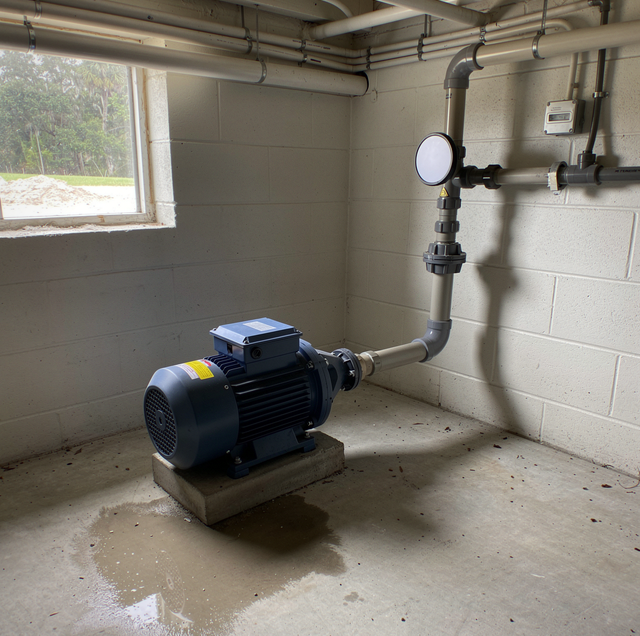
Before replacing a head, adjusting a valve, or assuming the pump itself has failed, three quick checks separate an irrigation pump problem from a zone-design problem that only looks like one. Weak coverage on a well-fed irrigation system has two entirely different root causes that produce nearly identical symptoms at the nozzle: either the pump can't deliver the flow the system is asking for, or the system is asking for more flow than any pump reasonably could, regardless of its condition. Fixing the wrong one wastes time and doesn't touch the actual problem. Replacing a pump to solve a zone-design problem still leaves the same weak heads underperforming once it's installed, and redesigning a zone to solve an actual pump problem still leaves it weak everywhere once the new layout is in place.
Step one: is the weakness well-wide or zone-specific?
Run every zone one at a time and note which ones look weak. If every zone shows reduced pressure and throw distance equally, the problem is almost certainly upstream: the pump itself, the intake, or the main line feeding all the zones. If only one or two specific zones run weak while the rest perform normally, the issue is much more likely local to that zone's plumbing, valve, or head count rather than the pump. This single test, run before touching anything, points the rest of the diagnosis in the right direction and rules out an entire category of potential fixes.
Step two: watch and listen to the pump during a zone cycle
With a zone running, listen for a change in the pump's sound as it starts, a rattling, gurgling, or uneven hum can indicate the pump is drawing air alongside water rather than a clean, solid stream, a condition called cavitation. Watching a pressure gauge at the pump, if one is installed, during the same cycle shows whether pressure holds steady or dips and fluctuates once a zone opens; steady pressure that's simply lower than it should be points toward a flow-capacity mismatch, while fluctuating, unstable pressure points more toward cavitation or a partial loss of prime.
Step three: inspect the intake screen and suction line
Irrigation pumps, whether sub-turbine, line-shaft turbine, or centrifugal booster designs, all depend on an unobstructed intake to move their rated flow. A partially clogged intake screen, common where fine sediment or organic debris reaches the pump's suction side, restricts the amount of water that can physically reach the impeller, regardless of how well the motor and impeller themselves are performing. This shows up specifically as reduced output under load, meaning the pump might read fine at idle or low demand but can't keep up once a zone with several heads opens and asks for full flow. Suction line diameter matters here too: a line sized correctly for the pump's rated flow keeps friction loss low between the source and the pump inlet, while an undersized or excessively long suction run adds resistance, reducing the effective flow reaching the impeller even with a completely clear intake screen.
Why zone design causes problems that look like pump failure
Every irrigation zone has a flow budget: the pump's rated gallons per minute at the system's design pressure, divided among however many heads that zone runs simultaneously. A standard spray head typically uses 1.5 to 2.5 gallons per minute, while a rotor head typically uses 2.5 to 4 gallons per minute per head. Mixing head types in the same zone compounds the mismatch, since each type is designed to perform at a different flow and pressure range. A zone with too many heads for the pump's rated output, or a zone mixing spray and rotor heads that were designed for different pressures, produces weak coverage at the farthest heads on that zone even with a pump running at full, undamaged capacity. This is the single most common cause of "weak zone" complaints on properties where the irrigation system was expanded over time, adding heads to existing zones, without recalculating whether the pump's output still covers the new total demand.
When it actually is the pump
A worn impeller on an aging centrifugal or turbine-style irrigation pump reduces total output the same way it does on any other pump type: eroded impeller edges and a widened internal clearance let water slip backward instead of being pushed forward, so the pump moves less water per revolution than its rating assumes. This shows up as weakness across every zone rather than one specific zone, which is exactly why the first diagnostic step, checking whether the problem is system-wide or zone-specific, matters so much before assuming either cause.
Why this shows up more on well-fed systems than municipal-fed ones
A municipal water connection draws from a utility system with far more reserve capacity than any single property could exhaust, so an oversized irrigation zone on municipal supply usually just pulls pressure down modestly rather than hitting a hard ceiling. A well-fed system has no such reserve. The pump has a fixed maximum output, and the aquifer feeding it has its own maximum sustainable yield; once a zone's demand exceeds either number, there's no additional capacity anywhere in the system to draw from. That's why well-fed irrigation systems are far less forgiving of a zone that was expanded, or a rotor head swapped in for a spray head, without redoing the flow math: the system either has enough capacity or it doesn't, with very little cushion in between.
Frequently Asked Questions
As a rough guide, a 10 GPM pump comfortably supports roughly four to five standard spray heads running at 2 GPM each, but only about two to three rotor heads at their higher 3 to 4 GPM draw; mixing head types on the same zone effectively lowers that head count further since the zone has to be designed around the higher-flow fixture type.
Yes, independent of pump capacity. Spray heads are designed to operate efficiently around 30 psi, while rotor heads are typically designed for 40 to 50 psi; running both types off the same zone valve forces a single pressure setting that's a compromise for both, which commonly shows up as one head type performing noticeably better than the other on the same zone.
Yes, particularly on systems where an irrigation controller runs several zones back-to-back without a recovery pause between them. If the well's yield (how much water the aquifer can supply per minute on a sustained basis) is lower than the pump's rated output, water drawn down during the first few zones can leave less available for later zones in the same cycle, producing weakness that gets progressively worse deeper into a run rather than staying constant across all zones. Aquifer yield itself isn't constant year-round either: wet-season recharge and dry-season drawdown shift how much sustained flow a well can supply, so a zone layout that performed fine during one part of the year can come up short during a lower-yield stretch even with no equipment change at all.
Pressure-regulating heads correct uneven pressure across a zone, typically caused by elevation changes or friction loss over a long pipe run, but they can't manufacture flow that isn't there; if the underlying issue is insufficient gallons per minute reaching the zone in the first place, pressure-regulating heads will deliver that reduced flow more evenly, not restore it to the original design volume.
Generally no. A restricted intake limits the total flow reaching the pump's impeller, regardless of which zone valve is open downstream, so it typically shows up as a system-wide weakness rather than a specific zone underperforming. The practical confirmation is simple: after cleaning or replacing the strainer, rerun the same single-zone test from step one on whichever zone looked weakest. If every zone improves together, the intake was the cause; if that one zone is still the outlier while the others test fine, the issue was never the intake, and it's worth looking at that zone's head count and valve condition instead.
Controllers that run zones with little or no pause between them give a well and pressure tank almost no recovery window to rebuild pressure and, on lower-yield wells, to let drawdown recover between cycles; adding a short soak or pause interval between zones, a setting available on most modern controllers, lets the system recover closer to its full rated pressure before the next zone opens, which can noticeably improve the last few zones in a sequence without any equipment changes.
Weak sprinkler coverage on a well-fed system almost always traces back to one of two places: the pump's actual flow capacity, or a zone's flow demand exceeding what any pump reasonably delivers. Working through the intake, the pump's sound and gauge readings, and each zone's head count in that order, rather than guessing, is what separates a real pump repair from an unnecessary one.
Get your irrigation pump and zone layout checked together before replacing heads that were never the problem - a technician can test flow at the wellhead and review your zone design in one visit. Pump Repair Services serves Apopka and the surrounding Central Florida area. Call (407) 625-5499.
