
How to Size a Pressure Tank Without Guessing
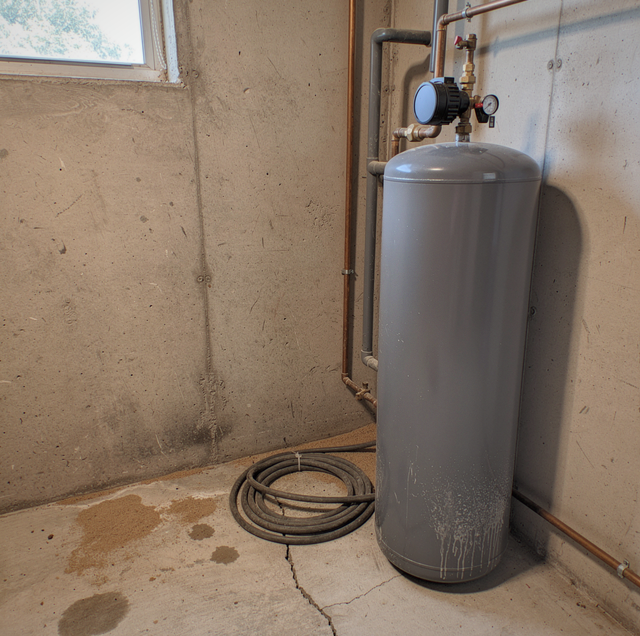
What actually determines whether a pressure tank is the right size: the gallon number stamped on its side, or something the spec sheet doesn't advertise at all? It's the second one. Matching a replacement tank to the physical footprint of whatever sat there before, or grabbing whatever the supply house has in stock, is one of the fastest ways to inherit a cycling problem that never existed before. Real tank sizing comes down to two numbers working together: how much usable water the tank releases between pump cycles, and how often the pump underneath it is allowed to start and stop without wearing itself out early. Get either number wrong, and the tank looks fine sitting in the utility room while the pump ages faster than it should.
The two numbers that actually decide tank size
Drawdown capacity: This is the volume of water a pressure tank can deliver between the pump's cut-in pressure (when it turns back on) and cut-out pressure (when it shuts off), not the tank's total volume. A 40-gallon tank might offer only 10 to 12 gallons of actual drawdown once air charge and plumbing losses are accounted for, because most of that volume is reserved for the compressed air cushion that pushes water out under pressure.
Target cycle time: This is how long the pump should run per cycle to avoid excessive wear. Most submersible well pump manufacturers rate their motors for a maximum number of starts per hour, typically 20 to 30, and specify a minimum run time per cycle (often 1 minute or more) to allow the motor to properly cool and lubricate its bearings before shutting off again. A tank sized without that spec in mind can force a pump to start and stop far more often than its motor was built to handle.
Matching tank drawdown to pump output
| Pump flow rate | Typical household fixture demand | Recommended drawdown capacity | Approximate tank size class |
|---|---|---|---|
| 6-8 GPM | Single-family, standard fixtures | 15-20 gallons | Mid-size (roughly 40-60 gallon total tank) |
| 8-12 GPM | Single-family with irrigation zone | 20-28 gallons | Large single tank or two mid-size tanks |
| 12-18 GPM | Larger home, multiple bathrooms plus irrigation | 28-40 gallons | Large tank or tank bank (two or more tanks) |
| 18+ GPM | Community, commercial, or multi-unit system | 40+ gallons | Tank bank sized to system engineering |
These figures describe the relationship, not a substitute for a technician's actual calculation, since a well's specific pressure switch settings (the cut-in/cut-out spread) shift the drawdown math for any given tank.
Calculating drawdown for a system that already exists
A technician sizing a replacement tank for an existing well doesn't start from a manufacturer chart alone. The process typically starts with confirming the pump's actual flow rate at the wellhead using a flow meter, since a pump's nameplate rating and its real output after years of impeller wear can differ meaningfully. From there, the pressure switch's cut-in and cut-out settings are recorded, since that spread defines how much of the tank's total air-and-water volume translates into usable drawdown. The final step compares that calculated drawdown need against the tank's published drawdown rating (not its total gallon capacity, which manufacturers list separately and which overstates what a tank actually delivers). Skipping any one of these three checks, especially by relying on the tank's total volume instead of its drawdown rating, is the most common way an otherwise correctly installed tank ends up too small for the system it's paired with.
Why undersized and oversized tanks both cause damage
An undersized tank forces the pump to restart far more often than its rated cycle count allows, because there isn't enough stored drawdown to satisfy even normal, brief water use before pressure falls back to the cut-in point. Rapid cycling repeatedly heats the motor windings without allowing them to fully cool between starts, and it hammers the pressure switch's electrical contacts with far more make-and-break cycles than they're rated for. Over time, that combination burns out motors and switches years earlier than a correctly sized system would.
An oversized tank causes a quieter but still real problem. Water can sit in a larger tank for extended periods between refill cycles, particularly in a low-demand household. Stagnant water against a tank's internal surfaces for longer stretches gives dissolved iron or mineral content more time to settle and coat the tank's interior. An oversized tank also responds more sluggishly after a power outage or during periods of heavy simultaneous demand, since it takes the pump longer to fully recharge a larger air-and-water reservoir to normal operating pressure.
How the pressure switch's cut-in and cut-out spread changes everything
Most residential systems run a 20 psi spread, commonly 30 psi cut-in to 50 psi cut-out, though some systems are set wider (40/60) specifically to pull more drawdown out of the same physical tank. Widening that spread increases the usable drawdown from an identical tank, because a larger pressure swing pushes more compressed air, and with it more water, out before cut-out is reached. That's a legitimate way to stretch an existing tank's effective capacity, but it also raises the peak pressure fixtures and fittings see on every cycle, so it isn't a free adjustment; a technician balances it against what the home's plumbing and fixtures are rated to handle.
Constant-pressure systems shift the math entirely
A variable frequency drive (VFD) based constant-pressure system modulates pump speed continuously to hold a steady output pressure rather than cycling the pump fully on and off between a cut-in and cut-out point. Because the pump ramps its speed up and down instead of stopping completely, a constant-pressure system needs a much smaller tank, often just enough volume to prevent rapid micro-cycling at very low flow rates, rather than a tank sized around drawdown for the whole household. This is a separate design decision from tank sizing on a standard cycling system, and retrofitting one onto an existing tank without adjusting for it usually doesn't deliver the pressure stability it's meant to provide.
When a single tank isn't enough
Larger homes with multiple bathrooms plus irrigation, and most community or commercial well systems, often exceed what a single tank of practical size can hold. In these cases, a technician commonly recommends a tank bank: two or more tanks plumbed together so their drawdown capacities add, giving the system more total usable water per cycle without requiring an impractically large single vessel. Tank banking also adds a layer of built-in redundancy, since the system can continue functioning, at reduced capacity, if one tank in the bank develops an air-charge leak. Tank banks also spread total system pressure across more air-charge volume, which, in practice, means that one tank losing its charge causes a smaller, more gradual dip in performance than the same failure would on a single-tank system, giving more time to catch the problem before household pressure noticeably suffers.
The most common sizing mistake
The single most frequent error in tank sizing isn't picking the wrong tank category outright; it's matching a replacement tank to the physical footprint of the old one rather than to the pump currently installed. Wells get their pumps upgraded over the years, often to handle added irrigation zones or a home addition with more fixtures, and a tank that was correctly sized for the original, smaller pump quietly becomes undersized for the upgraded one. Because the tank still fits in the same physical space and still holds pressure, nothing about the swap looks wrong until the new pump starts cycling more than expected. Checking the tank's drawdown rating against the pump currently in service, not the pump the tank was originally installed with, catches this before it turns into premature motor wear.
Frequently Asked Questions
Beyond faster wear, an undersized tank on a system with a submersible pump rated for roughly 25 starts per hour can push actual cycling well past that limit during normal morning or evening water use, and pumps run that hard commonly see motor failure within two to four years instead of the decade-plus service life a properly sized system supports.
Only if the existing tank's drawdown capacity still matches the new pump's flow rate and the household's demand; a tank sized correctly for a 6 GPM pump usually can't provide adequate drawdown for a 12 GPM replacement pump without cycling excessively, even though the tank itself is undamaged.
In wells with a wider casing (6 inches or larger), some systems use a portion of the casing itself as supplemental in-well storage above the pump, which can slightly reduce the surface tank size needed; narrower standard casings (commonly 4 inch or 5 inch residential) don't offer that option, so the full drawdown burden falls on the surface tank.
A bladder or diaphragm tank's air charge is typically set about 2 psi below the pump's cut-in pressure; a tank that has lost air charge due to a slow bladder leak delivers noticeably less usable drawdown than its rating, sometimes 30 to 50 percent less, which shows up as a pump that seems to short-cycle even though the tank size itself hasn't changed.
Not automatically, and older galvanized tanks without an internal bladder are more prone to becoming waterlogged (losing their air cushion entirely and filling almost completely with water) the larger they are, since more surface area means more opportunity for air to dissolve into the water over time; modern bladder and diaphragm tanks largely solved this failure mode, but tank type matters as much as tank size.
Tank banking is common on community wells, larger commercial properties, and homes with heavy simultaneous demand (large irrigation systems plus multiple bathrooms), where a single tank large enough to meet the drawdown need would be impractical to install, transport, or plumb into an existing utility space. A properly plumbed tank bank also includes an isolation valve on each tank, which lets a technician take one tank offline for bladder replacement or repair without shutting down water service to the rest of the property, something a single-tank system can't offer no matter how it's sized.
Before assuming a new tank is even required, check the two numbers that actually decide the question: the drawdown rating printed on the tank, not its total gallon capacity, and the pressure switch's cut-in/cut-out spread on the current setup. Those two figures, compared against what the pump installed today actually puts out, tell you whether the existing tank is still doing its job or was already outgrown before anyone noticed.
Get your pressure tank sized to your actual pump output and household demand - a technician can run the drawdown math and check your cycle rate in one visit. Pump Repair Services serves Apopka and the surrounding Central Florida area. Call (407) 625-5499.
